DISCOVER OUR 3D PRINTING RESINS

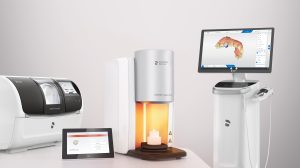
Dental resins have enabled significant advances in dental aesthetics, restoration, and the manufacturing of prosthetic devices. They can be used both in clinics for creating surgical guides and in laboratories to fabricate models for crowns or aligners. In this post, we will show you the wide variety of resins we offer, from more economical options like GT-Medical resins to premium Keyprint resins. Choose the one that best suits your needs on our website! GT-Medical RESINS Dental Model Resin Model resins allow for the quick and precise printing of models for crowns, bridges, implants, orthodontic models, and diagnostics. SUITABLE FOR: Model creation Mock-up testing Fit testing for crowns and bridges FEATURES: High contrast Fracture resistance Easy cleaning Good finish Dimensional stability buy now Try-In Resin Designed for fabricating dental pieces for fit testing or plastic trials. SUITABLE FOR: Printing crowns or bridges in VITA A2 color for testing. FEATURES: Easy cleaning Good finish Dimensional stability BUY NOW Soft Tissue Resin Specifically designed to accurately replicate the appearance and texture of gingival tissue in 3D printed dental models, including flexibility and a soft touch. SUITABLE FOR: Printing gingival tissue for models FEATURES: More rigid Limited working time Good finish Affordable price buy now DISCOVER KEYSTONE INDUSTRIES Keystone Industries is a prominent leader in the fields of dentistry and medicine. Their specialization in manufacturing high-quality products for healthcare professionals has been key to their global leadership. From dental restoration materials to cutting-edge printing equipment, each product reflects their commitment to excellence and reliability. KEYPRINT RESINS KeyPrint resins from Keystone Industries are precise formulations of 3D resins specifically designed for dentistry. These high-quality resins are manufactured in the USA and are available in North America, Europe, and other territories. Compatible with DLP printers and tested for biocompatibility, they ensure safety and efficacy for patients. With a 3-year shelf life and color stability, they offer reliable and durable prints for precise dental procedures. These Keystone resins are divided into two distinct groups: biocompatible resins for medical devices and laboratory resins. NOT SURE IF YOUR 3D PRINTER IS COMPATIBLE WITH KEYPRINT RESINS? FIND OUT IN THIS PDF BIOCOMPATIBLE RESINS Splint Resin: KeySplint Soft® Designed for fabricating flexible night guards or orthodontic devices with elastic memory. FEATURES: Non-yellowing Biocompatible Bite resistant Class IIA certified Flexible Easy to clean BUY NOW Surgical Guide Resin: KeyGuide® Designed for the production of transparent and firm surgical guides, facilitating the placement of implants with highly precise depth and angle. FEATURES: Biocompatible More rigid Good fit Autoclavable COMPRAR AHORA RESINAS DE LABORATORIO KeyModel Ultra™ Designed for 3D printing of dental models, suitable for thermoforming. FEATURES: Dimensional stability Good finish Easy to clean COMPRAR AHORA KeyMask® Artificial gum that is firm and flexible, simulating the appearance and sensation of gingival tissue. Incorporate KeyMask into your digital restoration planning for precise and lifelike results. FEATURES: Flexible Good finish Longer working time COMPRAR AHORA DOWNLOAD THE INFORMATIVE PDF We provide you with an informative PDF that explains everything about our resins: characteristics, uses, and more. Ideal for those seeking clear and detailed information to make the best decisions. LINK PDF

DISCOVER OUR 3D PRINTING RESINS Read More »

Having trouble removing an implant? We have the solution!

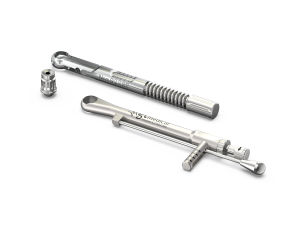
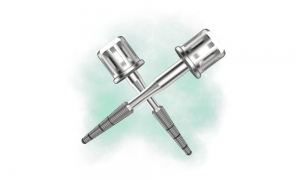
Explore the world of advanced dentistry with GT-Medical’s Universal Implant Extractor. This device provides an innovative solution to the challenge of removing poorly integrated or fractured dental implants without compromising the integrity of the alveolar bone. Its design offers an efficient and precise way to address these problems, ensuring a safe and risk-free extraction process for the patient. WHAT IS AN IMPLANT REMOVER? An Implant Extractor is a dental device that safely and efficiently removes problematic dental implants. This instrument applies controlled forces to loosen and remove the implant without damaging the surrounding bone. Its tapered body adapts to various implant types and clinical situations, offering a reliable solution for dental professionals. MAIN CHARACTERISTICS UNIVERSAL This product is compatible with all types of dental implants, regardless of their connection, platform, or length. MULTIFUNCTION The extractor is a single piece with conical geometry that can be adjusted to remove various damaged parts. The cut of the extractor will vary depending on the type of part that needs to be removed. LIMITED USE Designed for single use per patient, but can be reused up to two times (three uses) depending on the first use. MAXIMUM TORQUE The extractor can withstand torque of up to 200N-cm* to tighten it onto implants. *If the device fails to pull out near the maximum torque of 200N-cm -> trim the end about 0.5mm and try again. SIZES Available in two different lengths with identical extraction geometry. GENERAL EXTRACTION PROCEDURE Depending on the type of part to be removed, proceed in a particular way, but in general, proceed as follows: Check that the element is completely immobile**. Mill the surface to make a hole in the centre**. Cut the extractor to the specific size for each case. Insert the puller and turn counterclockwise, making sure it is tight. Insert the round ratchet and turn counterclockwise applying a maximum torque of 200N/cm. ** Proceed in the case of extraction of broken and/or worn screws. To read the complete and particular process for each case, please refer to the following PDF document. BUY GT-MEDICAL EXTRACTORS HERE

Having trouble removing an implant? We have the solution! Read More »

PERIAPICAL RADIOGRAPHS

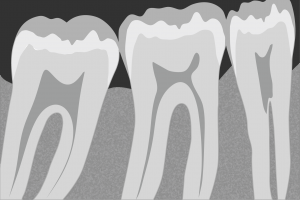
To identify an unknown implant, a clear and parallel periapical radiograph is essential. This technique provides detailed information about the implant, including the shape of the neck, the spires, the apex and in some cases allows us to distinguish the connection, providing valuable data for identification. In addition, it allows us to assess the condition of the teeth and surrounding bone, which is key in the evaluation of the treatment. Periapical radiography is an intraoral imaging technique used in dentistry to obtain a detailed view of a specific tooth and its surrounding structure. In this technique, images of the dental crown, root and adjacent bone are captured, providing information about dental health, root anatomy and the condition of the bone around the tooth. It is performed using radiographic plates placed close to the area of interest and provides a complete view of the periapical region, which is useful for diagnosis and dental treatment planning. What is a periapical radiograph? TECHNIQUES FOR PERFORMING PERIAPICAL RADIOGRAPHY BISECTOR TECHNIQUE The plane of the film and the axial axis of the tooth forms an angle with vertex at the point of contact of the film with the tooth. The beam is directed towards the apex of the tooth, perpendicular to the plane of the bisector. PARALLELISM TECHNIQUE The radiographic film is kept parallel to the axial axis of the teeth. The central beam of the beam is directed perpendicularly at right angles to the teeth and the film. PROCEDURE 1. PATIENT PREPARATION The patient is placed in the dental chair, protected by a lead apron and a thyroid collar to minimise radiation exposure. 2. POSITIONING OF THE FILM A special device with a rod and ring is used to hold the film in the patient’s mouth. The holder and receiver are placed in the mouth, making sure that the tooth or teeth to be studied touch the bite block, and verifying that the plane of occlusion is horizontal. 3. ADJUSTMENT OF THE MACHINE The locator ring is lowered until it is in contact with the patient’s face, ensuring the correct distance between the focal point and the plate. During this process, the patient is asked to maintain the proper position to capture the optimal image. 4. X-RAY EXPOSURE Once everything is ready, the operator activates the machine to expose the film to radiation for a brief moment, thus capturing the radiographic image required for dental diagnosis.

PERIAPICAL RADIOGRAPHS Read More »

IMPLANT IDENTIFICATION CHARACTERISTICS – THE APEX

Find in this entry the different aspects and characteristics that the apex can present. From flat ends, with or without holes, and apices with more or less marked grooves. INDEX Type of shape Straight Rounded Tapered Details Grooves Shape Straight Helical Size Short Long Holes Rounded Elongated 1. TYPE OF SHAPE The shape of the apex can be straight, rounded, V-shaped or tapered. 2. DETAILS GROOVES Some implants have grooves at the apex, which may be short and straight or long and around the body of the implant. HOLES There are implants that have some kind of hole in the apex, either circular or elongated. There are also implants that have a hole at the bottom that goes deep from the bottom to the body of the implant.

IMPLANT IDENTIFICATION CHARACTERISTICS – THE APEX Read More »

IMPLANT IDENTIFICATION CHARACTERISTICS – THE BODY

Learn in this entry all the possible shapes that the body of an implant can have, from a threaded body with grooves to conical bodies in its lower part. These aspects are shared by many implants, but characteristics such as thread pitch and size are characteristic of each implant model. INDEX Morphology Threaded Impacted General shape Straight Tapered Tapered Apex Thread shape V-shape Knife Square Upwards Downwards Rounded V Thread Pitch Short Medium Long Thread size Prominent Subtle Grooved 1. MORPHOLOGY Generally, the vast majority of implants have a threaded body, although there are some implant manufacturers that have non-threated implants, i.e. without a thread present in the body. 2. GENERAL SHAPE The body can have a straight shape, from the neck to the apex; it can have a tapered body  or only be tapered at the bottom (Tapered Apex). 3. THREAD FORM The thread section of the implants is a differentiating characteristic, although it presents a multitude of shapes, it can be classified into: V-shape or triangle shape, knife shape, square or trapezoidal thread, upward triangle, downward triangle or it can present a rounded V shape. 4. THREAD PITCH One aspect to take into account when identifying an implant is the thread pitch of the body. This varies according to the type of implant, but can be categorised as short pitch, medium pitch or long pitch. 5. THREAD SIZE Another characteristic that should not be underestimated is the size of the thread, as some bodies have very pronounced threads or, on the contrary, have subtle threads or almost micro-threads. On the other hand, there are some brands that add grooves in the body of the implant.

IMPLANT IDENTIFICATION CHARACTERISTICS – THE BODY Read More »

IMPLANT IDENTIFICATION CHARACTERISTICS – THE COLLAR

It is essential to know the different morphologies of the most common necks nowadays, in order to identify an implant. Discover in this post the different types of neck that an implant can have. INDEX Type of neck Wide Straight Narrow Angled Tapered Bone Level Bone Level Tissue Level External details Convergent neck Micro-threads 1. TYPE OF NECK Nowadays there is a wide variety of neck morphologies, but they can be classified into the following: wide, straight, narrow, angled and tapered.Recently, implant brands have been using narrow implant necks as a strategy to reduce pressure on the bony ridge. 2. BONE LEVEL Within the diversity of implant collars, a fundamental distinction arises based on the level of bone placement. Bone level: these implants are positioned at bone level (juxta-osseous) or even deeper (infra-osseous). They are often characterised by a switching platform. Tissue Level: these implants are placed above the bone and usually have a polished collar that is flush with the soft tissues. They should not be confused with implants that have undergone bone loss. 3. EXTERNAL DETAILS Additionally, some implants may exhibit specific details on the collar. These details may include micro-threads or micro-rings, as well as finishes that vary from machined collars to polished collars.

IMPLANT IDENTIFICATION CHARACTERISTICS – THE COLLAR Read More »

Scroll to Top