MAIN PARTS OF AN IMPLANT

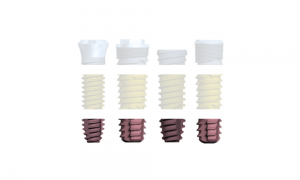
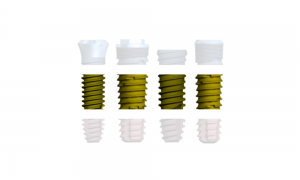
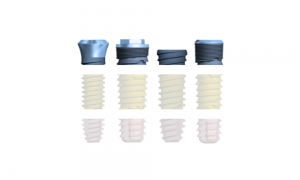
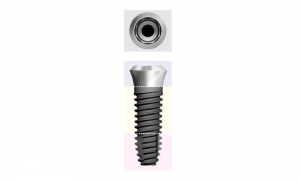
Have you ever faced the task of rehabilitating an unknown implant? In order to be able to identify an implant with an X-ray, the first step is to know its parts. In our entry “MAIN PARTS OF AN IMPLANT”, we provide you with a clear guide to differentiate each component (the connection, the neck, the body and the apex). This process is gradual, but these are the essential basics. Discover how, with experience, you will be able to identify dental implants through radiographs. MAIN GENERAL PARTS CONNECTION The implant connection is the union of the implant with the prosthesis, and can vary in design and characteristics according to the type and brand of implant. MORE INFORMATION NECK The implant collar is the upper section of the implant. It provides information such as the level of burial and its different morphologies. MORE INFORMATION BODY The implant body is the central part of the implant. It is usually threaded and presents a multitude of different shapes. MORE INFORMATION APEX The apex of the implant is the final section of the implant and the first part of contact when the implant is introduced into the bone. They are usually conical in shape but have a variety of shapes. MORE INFORMATION

MAIN PARTS OF AN IMPLANT Read More »

IMPLANT IDENTIFICATION CHARACTERISTICS – THE CONNECTION

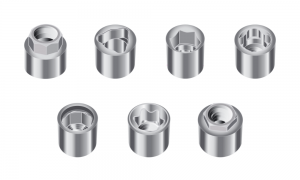
Identifying an unknown dental implant is a common challenge, but it can be easily overcome with the right knowledge. Our discussion on ‘Implant Identification Characteristics – the connection’ will equip you with the technical concepts necessary to understand the types of connections and acquire the necessary attachments to rehabilitate any implant with confidence. INDEX Type of connection External Hexagon Octagon Internal Connection form Hexagon Octagon Trilobular/ Tri-striated Hexalobular/ Hexa-striated Tetralobular/ Treta-striated Other connections Entry geonetry Internal Chamfer Morse Cone Flat base Especial Internal Thread Metric 1.4 to 2.5 American thread 1-72 UNF 1. TYPE OF CONNECTION In the context of connection, most implants can be classified into two main categories: external and internal connection. However, some special cases fall into the “special” category. This category covers monobloc implants with connections designed for overdentures, immediate loading or with grindable dies. EXTERNAL CONNECTION Within the external connection, the most common shapes are hexagonal and octagonal. Nobel Biocare Branemark, Biomet 3i Externa Straumann Standard Plus Ø3.3 NN, Biotech B.I.S Ø3.6 INTERNAL CONNECTION 1. CONNECTION FORM The “connection shape” plays a crucial role in preventing unwanted micro-movements and rotations between the dental implant and the prosthetic structure. The most common geometries used to be polygonal, such as hexagonal and octagonal. Recently, however, brands have opted for more complex geometries with lobes and grooves, such as trilobular (three lobes), tetralobular (four lobes) and hexalobular (six lobes). It should be noted that on conventional radiographs, the shape of the connection is often not clearly distinguishable; its optimal visualisation is achieved by intraoral photographs or images of the raised crown. Zimmer TSV Klockner Essential Nobel Replace Select, Implant Direct Reactive/ Replan BTI Interna Phibo Aurea Evo 2. ENTRY GEOMETRY The entry geometry plays a key role in ensuring bacterial sealing throughout the life of the implant, as well as absorbing most of the loads transmitted by the prosthetic structure. There are three main types of entry geometry: Bevel, Cone Morse  and Flat Rest. It is important to note that the seal provided by Cone Morse  connections is so effective that, in many cases, a cold weld is made, requiring the use of an extractor to remove the prosthetic structure. This feature is essential for the interpretation of radiographs, and is often clearly distinguishable, especially when the crown has been removed from the implant. 2. INTERNAL THREAD The internal thread of a dental implant is the helical structure located inside it, responsible for securing the connection with the prosthetic structure by means of a screw or threaded abutment. In the field of implants, there are two main types of threads, each following a different standard: The ISO Metric Thread: Standard based on the International System of Units, identified by the letter M followed by the nominal diameter in millimetres. Some common metric threads are M1.4, M1.6, M1.8, M2.0 and M2.5. Unified Fine Pitch Thread: Similar to the ISO metric thread, but with Imperial System of Units dimensions, especially used in the United States. In dental implants, 1-72 UNF, similar to Metric 1.8, is common. IMPLANT EXPLORERS At GT-Medical we have a set of “implant testers” of different connections, to check by yourself the type of connection and its platform diameter. They are available in the following connections: External hexagon Internal hexagon Zimmer type Internal Hexagon Flat Support Internal hexagon Conical connection Internal octagonal Conical Tetralobular Hexalobular In the following LINK you can purchase your “IMPLANT EXPLORERS”.

IMPLANT IDENTIFICATION CHARACTERISTICS – THE CONNECTION Read More »

SWEDEN & MARTINA – PRAMA IMPLANTS

Discover the technical features that make Sweden & Martina’s Prama implant unique! From its cylindrical body designed for optimal insertion to its internal hexagonal connection and its neck with hyperbolic geometry, every detail is designed to ensure maximum stability and perfect integration into the bone. INNOVATIVE DESIGN Sweden and Martina’s “PRAMA” implants represent an innovation in the field of dentistry, standing out for their focus on the intramucosal implant concept: their wide transmucosal portion and a conical shape converging towards the crown, offer clear advantages compared to conventional implants. The intramucosal implant concept has been one of the most prominent innovations in implant-prosthetics over the past 20 years. This approach has focused on soft tissues, recognizing their esthetic value and their biological function, highlighting that a thick, healthy and stable gingiva can protect the underlying hard tissues. NECK PARTS The neck of PRAMA implants are formed by : Cylindrical part: it favors the adaptation to the irregularities of the bone tissue and another convergent zone towards the crown. Convergent part: it leaves more space for the soft tissues to grow around the implant. CHARACTERISTICS AND ADVANTAGES The hyperbolic shape of the Prama neck has a distinctive convergent curvature that not only makes it easily adaptable to bony unevenness and asymmetrical ridges, but also avoids the need to modify existing bone. The UTM (Ultrathin Threaded Microsurface) surface of the collar is excellent for osteoblasts, promoting their growth and stability over time, as well as preventing plaque accumulation at the abutment level. This helps to adjust the depth of the implant as needed, creating a firm base. TYPES OF BODY, PLATFORM AND HEIGHT NECK BODY TYPES Straight: “PRAMA” – with straight apex and anti-rotation groove Tapered: “PRAMA RF” – with rounded apex and anti-rotation groove Narrow: “PRAMA SLIM” – with constant diameter of 3.30 mm PLATFORM TYPE Collex One, an internal hexagonal connection that maintains uniformity between implants of different diameters. Same platform diameter (3.4 mm) for different nominal diameters (3.80, 4.25 and 5.00 mm). Both Prama RF and Prama implants share this connection and the transmucosal collar. NECK HEIGHT PRAMA implants are available in 3 different collar heights: SHORT NECK: 1,8 mm REGULAR NECK: 2,8 mm LONG NECK: 3,8 mm AVAILABLE ABUTMENTS PRAMA STANDARD: Closes over the implant platform and is suitable for all platform diameters and neck heights. PRAMA IN 0.5: fits the neck of the implant up to a height of 0.5 mm and is suitable only for neck heights of 2.80 and 3.80 m PRAMA IN 1.5: includes the neck of the implant up to a height of 1.5 mm and is suitable for neck heights of 2.80 only. GT-MEDICAL COMPATIBILITY GT-Medical offers compatibility only for the Prama Standard Prosthesis. Explore the compatible digital attachments here.

SWEDEN & MARTINA – PRAMA IMPLANTS Read More »

KEYS TO IDENTIFY AN IMPLANT

Millions of implants are placed each year! And yet, it’s common for the patient’s implant passport – which contains necessary identifying data – to be lost. But fear not! This publication will confidently discuss how to identify an implant even when only its geometry, approximate year of implantation, or other distinguishing characteristics are known. RELEVANCE OF IMPLANT IDENTIFICATION Patients often arrive from other clinics without information about their implants, making it difficult to provide appropriate treatment. To offer safe and tailored treatment to each individual, it is crucial to understand the implants they have. However, our blog provides key information on identifying implants, even when precise information about their brand or model is unavailable. PHASE 1: INFORMATION GATHERING WITH PATIENT 1. PERIAPICAL RADIOGRAPHY A clear and straight periapical radiograph provides comprehensive information about the implant, including the shape of the neck, coils, and apex, as well as the condition of the teeth and surrounding bone. Rest assured that this publication provides all the necessary information on periapical radiographs. 2. INTRAORAL PICTURES In cases where radiography is insufficient, intraoral photos provide additional details about the shape of the connection, such as hexagons, octagons, trilobes, etc., and details of the prosthetic system, such as color coding. 3. PHOTOGRAPH OF THE PROSTHESIS OR SCREW Capturing detailed images of the prosthesis and its screw is crucial, particularly in implants with a Cone Morse internal connection. Intraoral photos may not clearly show the details of this connection. A clear photo of the crown and screw provides valuable clues to identify the type of implant. 4. CHECKING ATTACHMENTS To determine compatibility and save time, it is useful to test a standard attachment when information about an implant is limited. At GT-Medical, we offer “Implant Explorers” that serve as connection checkers and provide valuable data on screw metrics. Our Implant Scanners are key chains with Scan Bodies that are compatible with major implant brands. You can purchase them on our online store. 5. CLINIC, PLACE AND YEAR OF IMPLANT PLACEMENT To gather important clues, it is essential to confidently ask the patient for specific information such as the clinic, location, and year of implant placement. Consistent use of the same brand of implants across all locations was a common practice for some clinics. PHASE 2: INVESTIGATION OF THE TYPE OF IMPLANT 1. KNOW THE DIFFERENTIATING ASPECTS It is essential to know the different parts of an implant and those differentiating characteristics in order to be able to identify partially or even totally the implant.We recommend you to read this publication to discover the different aspects to take into account when observing an X-ray. 2. LIBRARY OF IMPLANT BRANDS Familiarity with various models of commercial implant brands can aid in identifying the specific type, brand, and model of the implant with confidence. To ensure accuracy, maintain a library of brand-specific catalogs for reference on characteristics and measurements. 3. ASK COLLEAGUES IN THE SECTOR If you are not sure of which implant model it is, even with an X-ray, you should ask other colleagues who understand the subject so that they can guide you. 4. CONSULT AN IMPLANT SEARCH ENGINE Specialized implant search engines such as Spotimplant, What Implant Is That?, and OsseoSource can aid in identifying the implant model with confidence. This tools boast a vast implant database and enable effortless filtering by implant characteristics.

KEYS TO IDENTIFY AN IMPLANT Read More »

CONNECTION IDENTIFICATION: EXTERNAL CONNECTION

Diversity in dental implant connections is a fundamental aspect of dentistry, offering practitioners and patients a variety of options. Among these, the external hex connection has been widely used over time, although its popularity has experienced a decline in recent years. Despite this trend, it is common to encounter cases of patients who have implants with this connection. Correctly identifying the external hex connection is crucial to the success of dental treatment. DISTINGUISHING FEATURES PLATFORM DIAMETER It is important to make a clear distinction between platform diameter and implant diameter: Implant diameter: this is the largest measurement that the body of the implant can have. Platform diameter: this is the upper measurement of the implant diameter, where the prosthesis will rest. Depending on the size of the implant platform diameter, the implant will be categorised into the following groups: NP – Narrow Platform: smaller than 3.75 mm. [ ⌀ 3.00 – 3.50 mm]. RP – Regular Platform: [ ⌀ 4.00 – 4.50 mm]. WP – Wide Platform: [ ⌀ 5.00 – 6.00 mm]. Although the platform most commonly used by the major external hex implant brands is the 4.1 mm platform, also known as Brånemark RP. INTERNAL THREAD Internal thread: this is the thread inside the body of the implant and whose size will coincide with its corresponding screw. The internal thread metric varies according to the platform size/diameter: Narrow (NR), Regular (RP) and Wide (WP). The most common platform metrics are: NP – Narrow: Metric 1.6 / 1.8 . RP – Regular: Metric 1.8 / 2.0. WP – Wide: Metric 2.0 / 2.5. CHARACTERISTICS OF THE HEXAGON FACE-TO-FACE DISTANCE Face-to-face distance: is the distance between two opposite and parallel faces of the hexagon. This characteristic of the hexagon depends directly on the size of the platform, as follows: NP – Narrow: measurement from 2.3 to 2.5 [2.4 mm]. RP – Regular: size from 2.7 to 3.0 [2.7 mm]. WP – Wide: size 2.7 to 3.4 [3.4 mm]. *The sizes in square brackets indicate the most common and commonly used sizes. HEXAGON HEIGHT Hexagon height: distance between the base where the prosthesis rests and the upper face of the hexagon. The measurements for hex height regardless of platform size are: [0.7 mm], 1.0, 1.2, 1.8 mm. *The measurements in square brackets indicate the most common and commonly used measurements. IMAGE SOURCE: The original images of the implants in this post belong to GMI. EXAMPLES PLATAFORM SIZE IMPLANT PLATFORM DIAMETER FACE-TO-FACE DISTANCE HEXAGON HEIGHT INTERNAL THREAD NP Brånemark 3,5 2,4 0,7 M 1,6 Phibo S2 3,3 2,3 1,0 M 1,8 Neodent HE 3.3/ Keystone Restore SD 3,3 2,5 1,0 M 1,8 RP Brånemark/ 3i/ Bti/  Klockner 4,1 2,7 0,7 M 2,0 Klockner SK2/ Osteoplus Argentum 4.2 4,2 3,0 1,8 M 1,8 Microdent System 4.2 4,2 3,0 1,2 M2,0 WP Brånemark 5,1 3,4 0,7 M 2,5 Biomet 3I 5,0 2,7 0,7 M 2,0 Phibo 5,0 3,0 1,0 M 2,0 Units: millimetres [mm].

CONNECTION IDENTIFICATION: EXTERNAL CONNECTION Read More »

Scroll to Top