
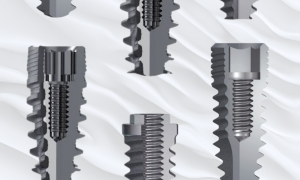
KEYS TO IDENTIFY AN IMPLANT
Millions of implants are placed each year! And yet, it’s common for the patient’s implant passport – which contains necessary identifying data – to be lost. But fear not! This publication will confidently discuss how to identify an implant even when only its geometry, approximate year of implantation, or other distinguishing characteristics are known. RELEVANCE OF IMPLANT IDENTIFICATION Patients often arrive from other clinics without information about their implants, making it difficult to provide appropriate treatment. To offer safe and tailored treatment to each individual, it is crucial to understand the implants they have. However, our blog provides key information on identifying implants, even when precise information about their brand or model is unavailable. PHASE 1: INFORMATION GATHERING WITH PATIENT 1. PERIAPICAL RADIOGRAPHY A clear and straight periapical radiograph provides comprehensive information about the implant, including the shape of the neck, coils, and apex, as well as the condition of the teeth and surrounding bone. Rest assured that this publication provides all the necessary information on periapical radiographs. 2. INTRAORAL PICTURES In cases where radiography is insufficient, intraoral photos provide additional details about the shape of the connection, such as hexagons, octagons, trilobes, etc., and details of the prosthetic system, such as color coding. 3. PHOTOGRAPH OF THE PROSTHESIS OR SCREW Capturing detailed images of the prosthesis and its screw is crucial, particularly in implants with a Cone Morse internal connection. Intraoral photos may not clearly show the details of this connection. A clear photo of the crown and screw provides valuable clues to identify the type of implant. 4. CHECKING ATTACHMENTS To determine compatibility and save time, it is useful to test a standard attachment when information about an implant is limited. At GT-Medical, we offer “Implant Explorers” that serve as connection checkers and provide valuable data on screw metrics. Our Implant Scanners are key chains with Scan Bodies that are compatible with major implant brands. You can purchase them on our online store. 5. CLINIC, PLACE AND YEAR OF IMPLANT PLACEMENT To gather important clues, it is essential to confidently ask the patient for specific information such as the clinic, location, and year of implant placement. Consistent use of the same brand of implants across all locations was a common practice for some clinics. PHASE 2: INVESTIGATION OF THE TYPE OF IMPLANT 1. KNOW THE DIFFERENTIATING ASPECTS It is essential to know the different parts of an implant and those differentiating characteristics in order to be able to identify partially or even totally the implant.We recommend you to read this publication to discover the different aspects to take into account when observing an X-ray. 2. LIBRARY OF IMPLANT BRANDS Familiarity with various models of commercial implant brands can aid in identifying the specific type, brand, and model of the implant with confidence. To ensure accuracy, maintain a library of brand-specific catalogs for reference on characteristics and measurements. 3. ASK COLLEAGUES IN THE SECTOR If you are not sure of which implant model it is, even with an X-ray, you should ask other colleagues who understand the subject so that they can guide you. 4. CONSULT AN IMPLANT SEARCH ENGINE Specialized implant search engines such as Spotimplant, What Implant Is That?, and OsseoSource can aid in identifying the implant model with confidence. This tools boast a vast implant database and enable effortless filtering by implant characteristics.
KEYS TO IDENTIFY AN IMPLANT Read More »


